Cooperation
Project Partners
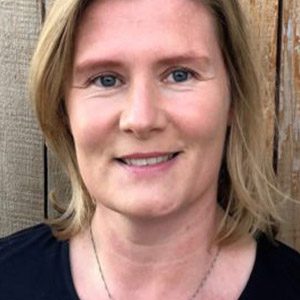
Anna Þorbjörg Þorgrímsdóttir
is a doctoral student in History at the Department of Historical Studies, University of Gothenburg, and a researcher at the Reykjavik Academy, Iceland, where she served as Director and Research Manager from 2018 to 2024. Her main fields of expertise include nineteenth-century history, the history of science, museums and cultural heritage, repatriation, museology, and cultural administration. She has published articles on these topics. Previously, she was Head of the Medical Museum in Iceland, Director of the Museum Council, a researcher at the National Museum of Iceland, and an independent scholar and curator. She has also taught museology at the University of Iceland.
RNP Contribution
Official Material Heritage Preservation in the Oldenburg Conglomerate State 1807–1866
Official material heritage preservation was established in the vast Oldenburg conglomerate state during the early 19th century. Scholars and officials from the state’s various provinces gathered in the capital, Copenhagen, where they worked together to preserve monu¬ments and collect objects that were regarded as source material for the history of the fatherland. Toward the end of the period under scrutiny, however, the political and institutional conditions changed fundamentally. The conglomerate state dissolved, and both the organizational and ideological founda¬tions were transformed. This subproject examines how, when, and in what ways these changes took place, and how they reflect a shift in historical perspectives and cultural-policy ideals. Particular attention will be given to the relationship between archaeological research and the study of the Old Norse-Icelandic literary heritage during the period.
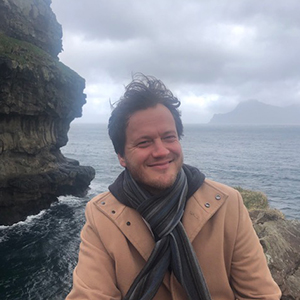
Simon Halink
is a cultural historian affiliated with the University of Iceland (Research centre Þingeyjarsveit) and the Marine and Freshwater Research Institute of Iceland. Previously, he worked as a senior researcher at the Frisian Academy (Fryske Akademy) in Leeuwarden, as an Assistant Professor of Modern European History at the University of Leiden, and as a postdoctoral researcher at the University of Iceland. He received his PhD from the University of Groningen, where he studied the cultivation of Norse mythology in Icelandic national culture. He has published numerous articles and book chapters on the role of landscape in identity formation and on the functions of philology, historiography and mythology in national discourses. Furthermore, he is the editor of the essay collection Northern Myths, Modern Identities: The Nationalisation of Northern Myths Since 1800 (2019) and author of De Viking vanbinnen. Over IJslanders en hun verhalenwereld (2023).
RNP Contribution
Was Iduna Frisian?
Nordic Tendencies in 19th-Century Frisian Culture
With the emergence of a Frisian national identity in the first half of the 19th century, Frisian intellectuals became increasingly interested in Scandinavian culture, mythology and language debates. In writings of literary figures such as Harmen Sytstra, the North is portrayed as a source of inspiration and renewal for the Frisian language, literature and culture. The Frisian-language magazine Iduna (named after the Old Norse goddess of eternal youth) was founded in 1846, using a controversial, archaic spelling of Frisian and containing the earliest Frisian translations of Scandinavian material. How did the cultivation of Nordic themes contribute to the cultivation of a Frisian cultural identity? And to what extent can the infamous Oera Linda Book – presented as an ancient manuscript but ‘forged’ in the 1860s, written in a pseudo-runic script – be considered an ironic expression of that same infatuation with all things Nordic? In this subproject, the scope of these Scandinavian tendencies will be charted, and compared to similar boreal initiatives in Europe, and to the national ideologies behind comparable publications in other countries.

Robert W. Rix
is Professor of English at the University of Copenhagen, Denmark. He has published widely on the political, religious, linguistic and cultural landscapes of the eighteenth and nineteenth centuries. In recent years, Rix has published on history and life in the Arctic, exemplified by his monograph The Vanished Settlers of Greenland: In Search of a Legend and Its Legacy (2023). He has recently co-edited the volume The Exceptional North: Past and Present Perspectives on Nordicness (2025) with Eva-Lena Bergström, Cian Duffy and Merethe Roos. He is currently PI in the DFF-funded project Nordic Exceptionalism: Perspectives on a European Periphery (NEPEP).
RNP Contribution
In Search of Odin
Travel Writing and the Making of the Mythic North
The chapter examines how 19th century British and American travellers to the Nordic countries – and especially Iceland – used the imagery and history of Norse religion to interpret the region and to articu¬late ideas about their own cultural origins. Travel accounts from this period – ranging from published travelogues to letters and diaries – repeatedly invoke figures such as Odin and Thor not only as remnants of a pagan past but as active frameworks for understanding Nordic landscapes, customs, and national character. The chapter argues that these mythological references were central to a broader 19th-century effort to locate the roots of the Anglo-Saxons in a shared Northern heritage. Travellers frequently described festivals, rural traditions, and even everyday social encounters as survivals of ancient Norse culture, projecting onto living communities a mythic kinship that supported contemporary racial and cultural theories. By tracing a set of representative travel narratives, the article shows how Norse religion functioned as a flexible symbolic resource that shaped both perceptions of the Nordic region and Anglo American self understanding. This imaginative engagement with the Old Norse past intersected with contemporary debates on philology, Protestant heritage, and national destiny, revealing how travel writing operated as a site where racial and cultural ideas were tested, refined, and popularised.
Advisory Board

Alderik H. Blom
Alderik H. Blom, Professor of Celtic at the University of Marburg, Germany. Blom also has expertise in the fields of romantic nationalism and history of 19th century Germanic philology.
Matthew James Driscoll
Professor Matthew James Driscoll, Department of Nordic Research, University of Copenhagen. Driscoll is a specialist in the editing of manuscripts and the history of philology.
Rasmus Glenthøj
Associate Professor Rasmus Glenthøj, University of Southern Denmark. Historian, specialising in 19th century Scandinavian and European history with particular expertise in political Scandinavianism.
Guðmundur Hálfdánarson
Professor Guðmundur Hálfdánarson, University of Iceland. Historian, generally regarded as the leading authority on Icelandic nationalism.
Robert W. Rix
Associate Professor Robert W. Rix, University of Copenhagen. Rix has done extensive research on the reception of the North in Anglophone literature. He is also an expert on romanticism.
Sveinn Yngvi Egilsson
Professor Sveinn Yngvi Egilsson, University of Iceland. His main fields of expertise are modern Icelandic literature, including romanticism, the reception of medieval literature, ecocriticism and nationalism.
Alderik H. Blom, Professor of Celtic at the University of Marburg, Germany. Blom also has expertise in the fields of romantic nationalism and the history of 19th century Germanic philology.
Professor Matthew James Driscoll, Department of Nordic Research, University of Copenhagen. Driscoll is a specialist in the editing of manuscripts and the history of philology.
Professor Rasmus Glenthøj, University of Southern Denmark. Historian, specialising in 19th century Scandinavian and European history with particular expertise in political Scandinavianism.
Professor Guðmundur Hálfdánarson, University of Iceland. Historian, generally regarded as the leading authority on Icelandic nationalism.
Professor Sveinn Yngvi Egilsson, University of Iceland. His main fields of expertise are modern Icelandic literature, including romanticism, the reception of medieval literature, ecocriticism and nationalism.